What forms of separation mean in a switchboard
Form 1, Form 2, Form 3 and Form 4 explained in plain language, and how to choose the right one for your building.
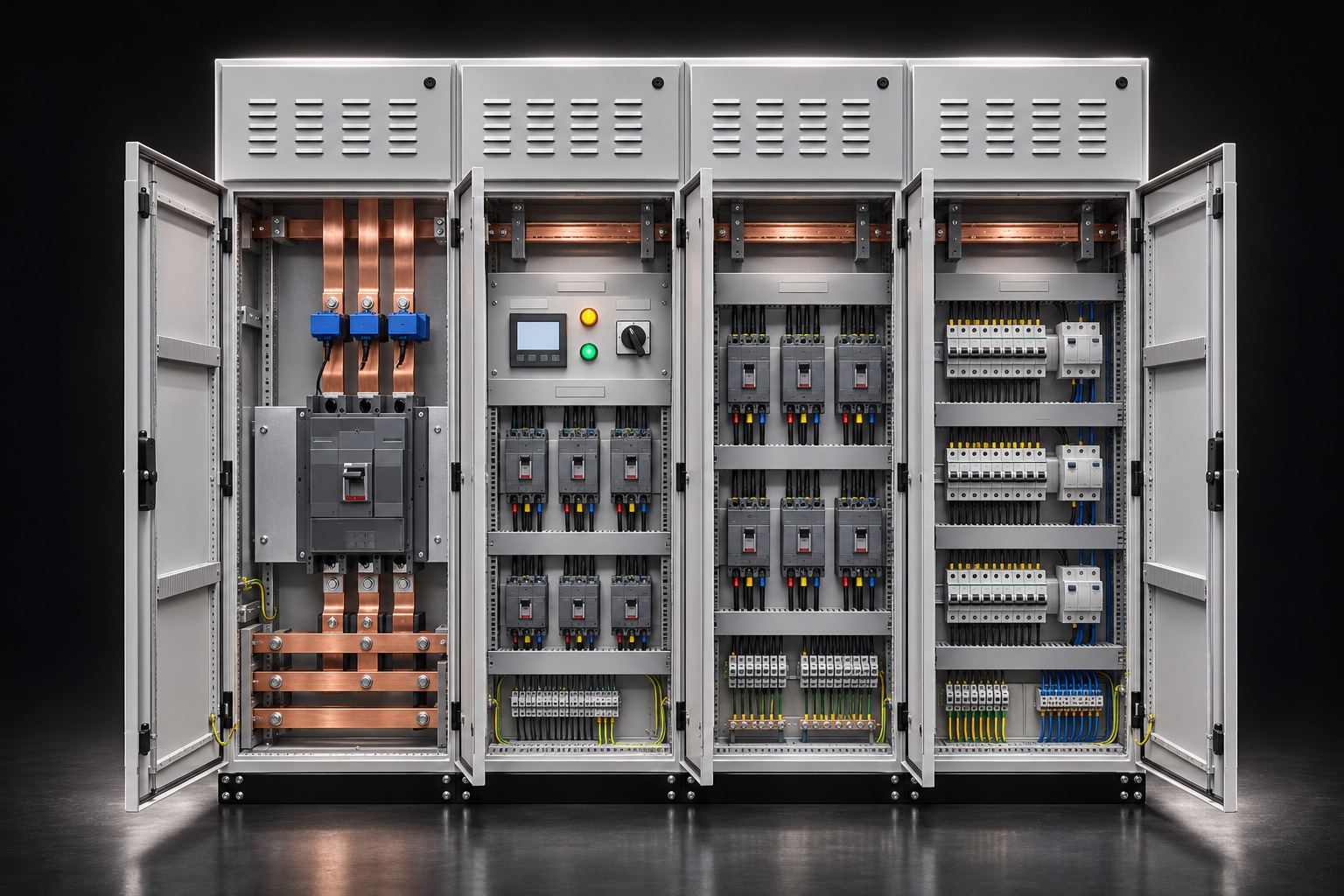
blog-busbar-detail.jpg If you have seen "Form 2b" or "Form 4" in a switchboard specification and wondered what it means, you are not alone. Forms of separation describe how the inside of a board is divided up with barriers. They affect safety, how easy the board is to maintain, and what it costs. This post explains them in plain language.
The idea behind it
A switchboard has three kinds of things inside it:
- Busbars, the copper that carries power across the board
- Functional units, meaning each breaker or switch and the parts that go with it
- Terminals, where the outgoing cables are connected
Forms of separation are a way of saying which of these are separated from each other by barriers or partitions. The forms are defined in the international standard for low voltage switchgear assemblies, IEC 61439-2. The more separation, the more you can safely do on one part of the board while the rest stays live.
Form 1: no internal separation
All the parts share one space. To work on anything inside, the whole board is normally switched off. Form 1 is common in small distribution boards where an outage for maintenance is acceptable.
Form 2: busbars separated
The busbars are behind a barrier, away from the functional units. The units and their terminals still share space with each other.
- Form 2a: terminals are not separated from the busbars.
- Form 2b: terminals are separated from the busbars as well.
Form 2 protects people from accidental contact with the busbars, which carry the most energy in the board.
Form 3: units separated from each other
Now each functional unit also has its own compartment, separated from its neighbours and from the busbars. You can work on one unit with less risk to the others.
- Form 3a: terminals are not separated from the busbars.
- Form 3b: terminals are separated from the busbars.
Form 3 suits boards where one feeder may need attention while the rest of the building keeps running.
Form 4: terminals separated too
Each functional unit and its own terminals sit in their own compartment, apart from every other unit and from the busbars.
- Form 4a: the terminals are in the same compartment as their own unit.
- Form 4b: the terminals are in a separate compartment from their unit.
Form 4 gives the most separation. Cables for one circuit can be connected or disconnected while neighbouring circuits stay live, under the right safe work procedures.
What separation does not do
Barriers reduce the chance of touching live parts and help contain a fault. They do not make live work safe on their own. Isolation, lockout, testing for dead and the correct protective equipment still apply. A form of separation is one layer of protection, not a replacement for safe work practice.
How the standard allows barriers to be made
The standard allows separation to be achieved in different ways: metal or insulating barriers, insulated covers on busbars, or the device's own housing. Two boards can both be "Form 4" and still look different inside. If the method matters to you, put it in the specification.
Choosing the right form
There is no single right answer. A few questions help:
- Can the building tolerate a shutdown for maintenance? If yes, a lower form may be fine. Hospitals, data rooms and factories usually cannot.
- How often will circuits be added or changed? Tenant buildings change often, which favours higher forms.
- Who will work on the board? Higher forms make life easier for maintenance teams.
- What does the budget allow? More separation means more steel, more space and more labour.
- What does the engineer's specification require? On most larger projects, the consulting engineer will state the form.
A note on space
Higher forms take up more room. A Form 4b board with the same circuits as a Form 2 board is usually wider or deeper. Check the plant room drawings early so the board fits, with the clearances needed in front for doors and safe working.
In short
- Form 1: one shared space.
- Form 2: busbars behind a barrier.
- Form 3: each unit in its own space.
- Form 4: each unit and its terminals in their own space.
If you are unsure which form your project needs, send us the drawings and the specification and we will talk it through.
[CONFIRM: Nedlog to review this post before it is published, including which forms Nedlog builds.]